
Retail interiors are experienced through movement. Shoppers walk past windows, turn into aisles, pause near product tables, and look across open spaces from changing angles. A flat screen can be effective, but it does not always respond naturally to this movement. Curved LED displays can create a more fluid visual experience, especially in stores where architecture, circulation, and brand atmosphere are part of the selling strategy.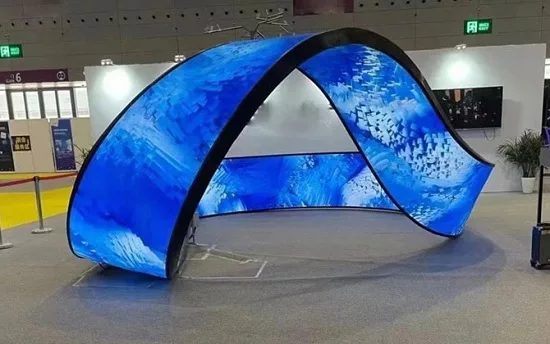 A curved display can soften a corner, wrap a product zone, frame an entrance, or create an immersive backdrop for a premium collection. Instead of interrupting the store with a flat rectangle, the display can follow the shape of the environment. This makes digital content feel more integrated with the physical space. For fashion, beauty, sportswear, automotive, and lifestyle retail, that sense of integration can make the store feel more designed and more memorable.
The BIM MIN curved commercial LED display is relevant for projects where smooth indoor curvature, clear image quality, and practical maintenance all matter. Curved retail display solutions require careful splicing because the viewer can notice uneven joints more easily when light moves across a rounded surface. The display must support the visual idea without creating technical distractions.
The first planning question is how shoppers will encounter the curve. If the display wraps a corner near the entrance, it may need bold content that is readable from a moving viewpoint. If it surrounds a product presentation area, it can use slower immersive visuals that reward people who pause. If it sits in a mall atrium, the curve may need to work from several viewing distances. The content rhythm should match the traffic pattern.
Curvature should also have a purpose. A display should not be curved only because the format looks fashionable. It should solve a spatial or storytelling problem. For example, a curved wall can guide shoppers into a zone, reduce the visual harshness of a corner, or create a panoramic product story. When the reason is clear, the installation feels intentional rather than decorative.
Content production for curved LED surfaces requires planning. Straight lines, product labels, and faces can appear distorted if the creative is not designed for the display shape. The team should test how key visuals behave across the curve. Large background motion, product textures, and environmental scenes often work well, while small text and complex grids should be used sparingly. A simple visual idea can look more premium than overloaded content.
Lighting and materials around the display also influence the result. Glossy floors, glass, mirrors, and metal fixtures can create reflections that change how the screen appears. Interior lighting should support the display without causing glare or reducing contrast. In a premium store, the LED surface should harmonize with the surrounding materials, not overpower them. The display is part of the room, not a separate advertising object.
Maintenance access is essential because curved displays are often integrated into built structures. If the screen is difficult to reach, small problems can become disruptive. Front service, modular replacement, cable planning, and ventilation should be built into the design. Store teams also need to understand basic operation, startup procedures, and content scheduling so the display remains reliable during daily business.
Curved displays can also solve awkward spatial problems. A retail corner that feels empty, a circular column that interrupts sightlines, or a transition between two departments can become a more useful brand surface. Instead of hiding these architectural conditions, retailers can turn them into moments of motion and storytelling. This is one reason curved LED is often attractive in renovation projects where the existing space already has unusual geometry.
Retailers should avoid overusing effects simply because the screen shape is dramatic. Fast motion, high contrast, and complex animation may attract attention, but they can also overwhelm shoppers if used continuously. Curved displays usually work best when the content has rhythm: moments of impact, moments of calm, and enough repetition for customers to understand the message. The goal is immersion, not visual fatigue.
The project team should prototype the curve whenever possible. Even a digital preview or temporary layout can reveal how content flows from one angle to another. It can also help the brand decide whether the curve should be subtle, panoramic, or more dramatic. This step reduces the risk of choosing a shape that looks good on paper but feels awkward in the store.
A calm visual baseline also helps staff use the space comfortably during long business hours.
Curved LED displays are most successful when designers, marketers, and technical teams work together. The designer protects the spatial experience, the marketer defines the message, and the display specialist ensures the system can perform over time. Retailers exploring immersive store concepts, curved corners, or product-zone environments can reference xR and VP LED display solutions to match the display curve with the customer journey.