
A single EV charger rarely changes how a building operates. A parking level full of chargers can. Add bidirectional charging, and the site is no longer just delivering energy to vehicles. It may also be pulling energy from parked vehicles, supporting building loads, or preparing for future grid programs.
That is why apartments and fleet depots should treat charging as an energy-management project, not a parking upgrade.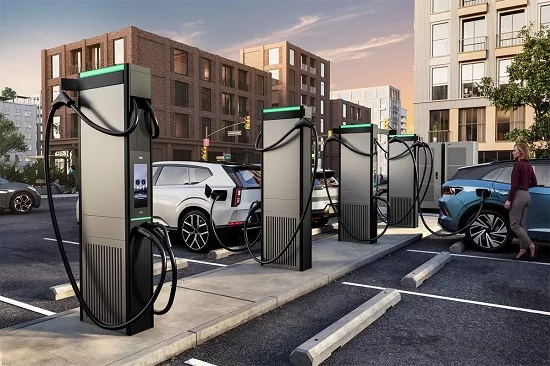
The real constraint is not always charger count
A property owner may start with a simple question: how many chargers can fit in the lot? The better question is how much power the site can use at the times drivers actually plug in.
Multifamily charging has unpredictable driver behavior. Residents come home at different times, stay parked overnight, and expect billing to be fair. Fleet charging is more scheduled, but the stakes are higher. Vehicles may need to leave before sunrise, and a missed charging window can affect routes, deliveries, or service calls.
The U.S. Department of Energy’s Alternative Fuels Data Center separates multifamily, workplace, and fleet charging into different planning categories because dwell time, ownership, and operational needs change the design. Bidirectional charging adds one more layer: some vehicles may eventually send energy back to the building or grid.
Load balancing is the quiet workhorse
Load balancing means the site adjusts charging power across vehicles instead of letting every charger pull maximum power at once. In an apartment building, that can prevent a small number of EVs from crowding out the rest of the electrical capacity. In a fleet depot, it can prioritize the vehicles that need to leave first.
Bidirectional charging makes this coordination more important. Vehicle-to-building, or V2B, can support onsite loads. Vehicle-to-grid, or V2G, may export power through an approved utility or aggregator program. Neither should happen casually. The system needs rules for minimum vehicle charge, building demand, driver priority, and emergency reserve.
The National Renewable Energy Laboratory has described managed charging as a key tool for integrating EVs without unnecessary grid stress. For shared sites, that idea is practical, not theoretical. The value comes from deciding when each vehicle charges, how fast it charges, and whether discharge is ever allowed.
Storage can buy flexibility
Stationary storage can help a site avoid treating the utility service as the only source of flexibility. A commercial battery can charge during lower-demand periods, discharge when vehicle charging and building loads peak, and support resilience for critical equipment.
For fleet depots, storage may reduce the urgency of a service upgrade or make phased electrification easier. For apartments, it can help property managers offer more dependable charging without letting evening demand spikes define the whole project.
This is where SigenStack commercial energy storage fits naturally into the plan. It gives commercial and industrial sites a storage layer that can work alongside charging infrastructure, rather than leaving chargers to compete directly with building loads.
Operations matter after installation
The hardest part of shared charging is often not the first week. It is month six, when more residents have EVs, routes change, or a manager needs to explain a demand spike on the utility bill.
Before installation, operators should define the basics: who gets charging priority, how minimum vehicle charge is protected, when discharge is allowed, how billing works, and who receives alarms when equipment behaves unexpectedly.
Visibility is what keeps those rules from becoming guesswork. A platform such asSigen Cloud for energy visibility can help operators monitor device status, historical behavior, alarms, and energy flows across the site.
The better rollout is phased
Apartments and depots do not need to electrify every parking space on day one. They do need a plan that can grow without ripping out the first installation. That means modeling electrical capacity, expected adoption, charger access, storage, monitoring, and future bidirectional use before equipment is ordered.
The International Energy Agency’s Global EV Outlook notes that charging infrastructure must scale with EV adoption. Shared parking is where that challenge becomes visible first. A coordinated design gives property owners a better chance of adding chargers without creating a new operational headache.